

Topics

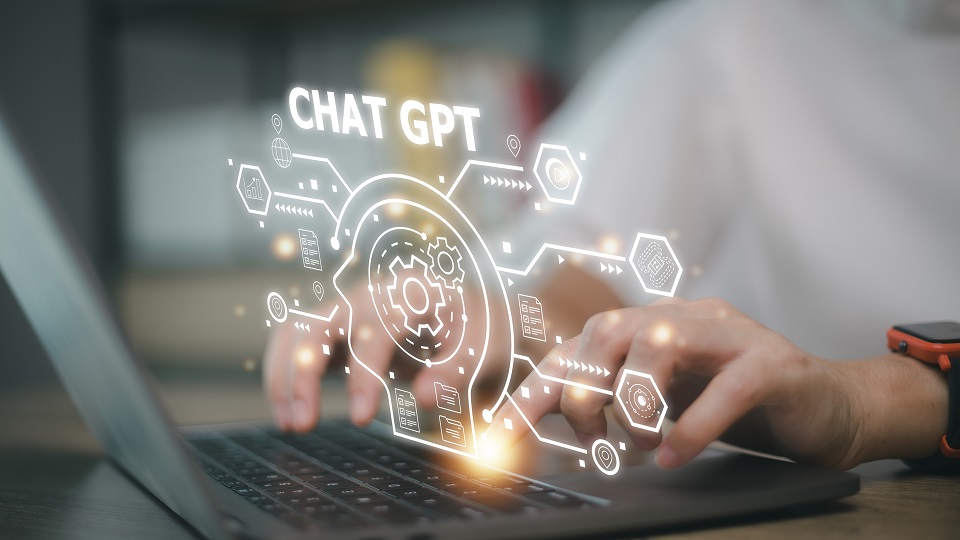
ChatGPT, a machine learning language generation model created by OpenAI, has recently captured the attention of tech wizards and investors alike. Unveiled on November 30, 2022, it quickly gained a remarkable one million users in its first week, demonstrating its potential to revolutionize the way business works in the future.
The AI-powered model has been the talk of social media, with users praising its ability to interact with them in a conversational manner and generate unique written content. ChatGPT’s innovative capabilities are sure to have a significant effect on the market.
How Can Businesses Benefit From ChatGTP – 3 ?
There are uses for technology like ChatGPT in almost every business. Here is a quick rundown of six industries that artificial intelligence is expected to disrupt:
Data analysis: ChatGPT’s coding skills are a game changer for individuals wishing to run site scrapes and the like, making the process much quicker than traditional ways and proposing libraries that the user may not have been aware of.
Copywriting and public relations: Based on a set of criteria, ChatGPT can write a well-written, original answer that can be distributed to the media or turned into an article. In addition, rather than taking hours by hand, it may quickly provide story ideas and pitches in customized emails to editors. Video scriptwriting is only one example of how content makers can put this to use.
Customer service: ChatGPT, an AI platform, may be used to sort through client interactions, whether they took place on the phone, through email, messaging, or social media, and then create fresh responses in light of its findings. This enables salespeople to create the ideal response to a customer’s question or complaint.
Sales: ChatGPT can be used to fine-tune sales presentations to potential clients, freeing the sales force to make more calls and, as a result, increase sales and revenue.
Teaching: ChatGPT won’t be able to take the position of a teacher in a classroom, but it can undoubtedly aid in their preparation. Lesson planning, for example, takes up close to 50% of the time that educators spend at work. ChatGPT can finish this assignment in a split second.
Healthcare: A large portion of a healthcare professional’s everyday job is writing medical reports and summaries. When properly asked, ChatGPT can generate outlines and overviews that the healthcare professional can then amend, saving them time and allowing them to engage in more patient-facing tasks.
These are just a few instances of how technology like ChatGPT may help businesses in the future.
It should be highlighted that in order to utilize ChatGPT effectively, users will need to learn a number of new skills, including how to properly prompt the programme, how to cross-reference any relevant information, and how to change and customize the outputs.
There is potential for this technology to aid in the employment sector as well. The companies and people responsible for creating and marketing this technology, as well as those responsible for teaching others how to use ChatGPT correctly, all need people who are good at teaching. There will be a considerable demand for experts in training artificial intelligence systems to acquire knowledge from datasets tailored to certain fields and sectors.
Downsides:
Of course, this technology could have some drawbacks. Even though it has billions of parameters right now, it has some limitations, including:
The potential for biassed results: ChatGPT was trained on a sizable dataset of text that was produced by humans. This dataset can have biases that show up in the model’s output, which can be especially problematic if ChatGPT is used to generate material for delicate subjects or support decision-making.
Built-in restrictions: OpenAI programmed ChatGPT with restrictions that prevent it from talking about sensitive subjects.
Content that might be exaggerated or deceptive: Because GPT is a language-generation model, it is unable to fact-check or confirm the veracity of the text it produces. This implies that if given a deceptive cue, it may produce unrealistic or false content.
Some jobs may be threatened by technology. As was already mentioned, ChatGPT and its ilk are significantly faster at producing data and content than a human. As the global economy slows, many firms are feeling pressure on their margins and bottom lines. Managers are looking for cost-cutting measures, and substituting people with technology has been one of them for hundreds of years.
But, as is customary in business, when new technology replaces a position, employees will find new positions. For instance, content producers can change careers and become content editors. While technology can generate a copy to a standard in a fraction of the time it takes a human, it still requires a human eye to ensure everything is accurate because of the limitations mentioned above. Also, it lacks the distinctive flair and style that a human writer might add to a piece to engage readers and avoid sounding “robotic”.
Read More: – 2023 Guide: How to Make Money Online in UAE
Conclusion
In the upcoming months and years, ChatGPT’s adaptability and capacity to produce high-quality, human-like prose are poised to make it a valuable tool for a wide range of activities.
People and businesses who see ChatGPT’s promise while also knowing and navigating its constraints will immediately grasp the enormous potential this tool offers for streamlining and accelerating workflows. The capacity to semi-automate boring, repetitive writing activities will free up time and allow personnel to concentrate on the main duties of their employment, which will help professionals achieve a better work-life balance.
Although this technology is still in its infancy, organizations like OpenAI will continue to improve its offerings and develop new ones as time goes on.

2026 Civil Law Updates For a Business Setup in UAE

Thorough License Procedures for Getting Digital Nomad & Remote Businesses

A Guide For Gaming Business Setup in the UAE

Updated AML UAE Laws Business Owners Must Know

Why Does an AI Business Set Up in Dubai Offer Advantages?

Free Zone Visa Benefits for Employees in UAE

Complete Guide About an Industrial License in Dubai

Why Dubai, UAE, is Considered the World’s Crypto Capital?

New Visitor Visa Rules in Dubai, UAE for 2026

Major Updates to UAE Tax Procedures Law Effective January 2026
Copyright © 2026 Make My Firm. All rights reserved.
 Call Us
 Enquire Now